City’s Scientific Services upholds accreditation to ensure healthy water, air quality standards
09 October 2023
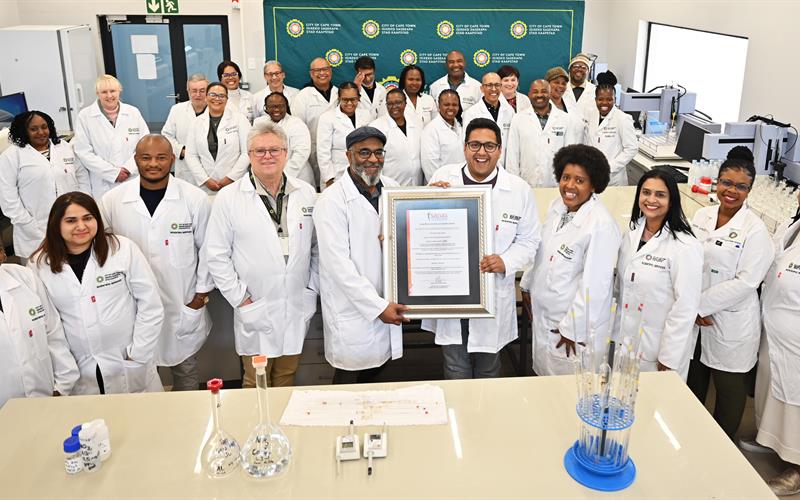
Monitoring and testing water and air quality in Cape Town is a crucial behind-the-scenes service to help ensure our residents' safety. For this reason, it is commendable that the City’s Water and Sanitation’s Scientific Services Branch continues to be ISO/IEC 17025 accredited by the South African National Accreditation System (SANAS). Most recently, Scientific Services also successfully added four more testing methods, expanding the accreditation scope and including additional technical signatories.
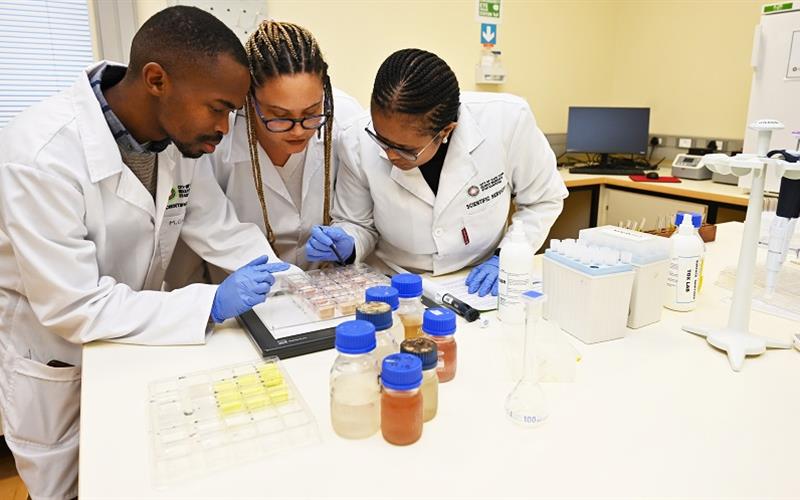
The City of Cape Town's Scientific Services branch based in Athlone is the only municipal laboratory of its kind in the country. Its cutting edge labs conduct scientific tests of water samples collected from rivers, dams, vleis, wastewater, industrial effluents and drinking water, as well as monitoring air quality across the city. In the 2022/2023 financial year alone, over 55 000 samples were collected and tested by Scientific Services.
Alongside the high tech equipment and laboratories, the team prides itself on upholding the best quality standards. This includes the ISO/IEC 17025 which is the main standard used by testing and calibration laboratories worldwide to be deemed technically competent. Scientific Services is assessed on a five-year cycle with surveillance assessments every 18 months. The last five-year reassessment was in 2021 followed by a surveillance assessment in March 2023, where the extension of the scope of accreditation was approved by SANAS, with seven additional technical signatories added across the Microbiology, Hydrology and Chemistry labs and overall ISO/IEC 17025:2017 accreditation was successfully maintained.
These four additional test methods were added:
Chemistry Test Methods are as follows:
- Determination of Fluoride Colorimetric for Environmental water, Industrial Water, drinking water, Leachates, Swimming Pool Water, Potable Water (from dams and treated) and Borehole Water.
- Determination of Sulphate Turbidimetric for Environmental water, Industrial Water, drinking water, Leachates, Swimming Pool Water, Potable Water (from dams and treated) and Borehole Water.
Microbiology Test Methods are as follows:
- Modified to include other sample matrices: Detection and Enumeration of Total Coliforms and Escherichia coli (Colilert Quanti Tray Method) for Drinking water, Borehole Water, Environmental Waters (Vleis, Rivers and Dams) and Wastewater.
- Enumeration of Heterotrophic Plate Count (HPC) for drinking water, Borehole Water and Springs Water
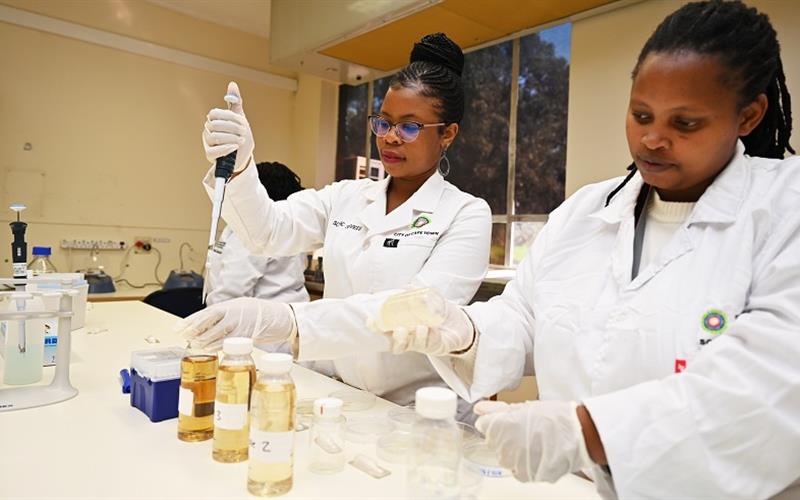
'Since 2011, following regular surveillance assessments, the branch has successfully been able to uphold this accreditation and gradually added more test methods over the years, initially starting with three.
'This is quite an achievement as we not only maintained our ISO/IEC 17025:2017 accreditation but managed to expand our scope of accreditation with four new test methods. We also managed to increase the number of technical signatories by conducting internal training. This accreditation signifies the importance of the quality of the work we produce for our residents. It also instils credibility on the analysis we perform, fostering trust in our results,' said Mayoral Committee Member for Water and Sanitation Councillor Zahid Badroodien.
 End
End
Published by:
City of Cape Town, Media Office